I am a trained model too
A surgeon's view of AI, copyright, and the difference between learning and taking
Dr Samantha Pillay OAM
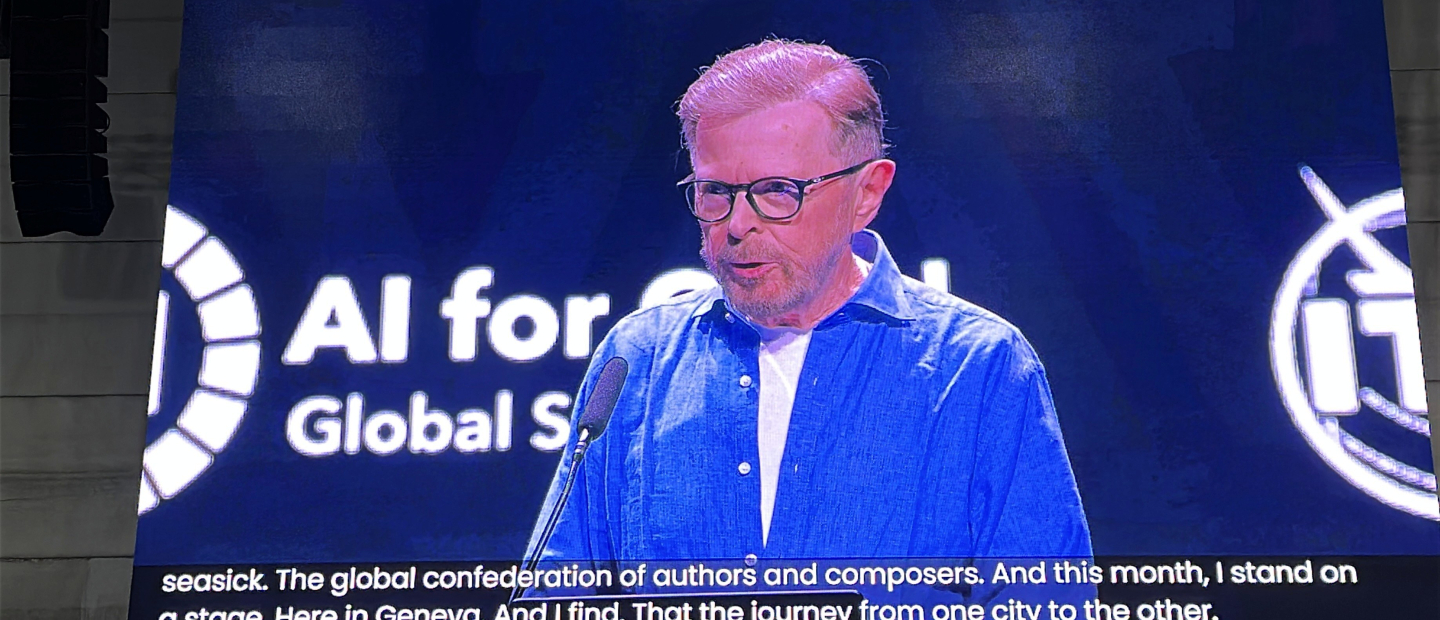
In July I was in Geneva for the United Nations AI for Good Summit, when Björn Ulvaeus took the stage. He wrote the songs that made ABBA. He now leads CISAC, the global confederation that speaks for five million creators. I expected a plea to protect music from the machines. That is not what he gave us.
He was not asking for AI to be stopped or sued out of existence. He argued that the industry is fighting the wrong battle by chasing what AI produces. A model does not keep a copy of any song. It learns patterns across millions of them, and what comes out is something new. The real question, he said, sits at the other end: the human work the machine was fed. License that, and pay for it collectively, the way streaming already returns a share of its revenue to the people whose songs fill it.
A week later in Australia, the Prime Minister drew his own line in a speech on AI. Government information, he said, is put out freely for everyone. Disaster warnings, travel advisories: the wider they spread, the better. Creative work is different. It is owned, and no company should use it to train AI without the artist's control of its price and value. His words were blunt. "Anything less," he said, "is theft."
I listened to both arguments as two people at once.
As a doctor, I understand knowledge shared for humanity. Medicine advances because we publish what we learn. Every textbook, every journal, every case report exists so that someone else can learn from it, and the next patient can get treatment.
As a writer, a published author and a filmmaker, I understand creativity. My books and films are my creations.
And medicine itself refuses to pick a side, because it is part science and part art. I take a shared knowledge base and create something custom for every patient. No two patients are the same. No two operations are the same.
Which brings me to the uncomfortable part. I am a trained model too.
I spent fourteen years learning to be a surgeon, and I trained on other people's work. Every operation I watched, every textbook, every paper, every patient who let me learn. A few of the surgeons who taught me held university posts that paid them to teach. Most were paid nothing extra to teach me: they were being paid to treat patients, and taught me while they did it. None have been paid since for what I built out of it. Nobody traced my skill back to its sources and sent each of them a share of every operation I have ever billed. I absorbed it all and built a judgement I sell for a living. We call that an education. Nobody calls it theft.
And I have trained other surgeons. They stood in my theatre and watched. They learned my methods, took them back to their own practices, and replicated my operations. Those operations were never mine. They are theirs. What they could not do was claim my work as their own, or bill for a patient I saw. And I was never owed a share of the operations they went on to perform.
So when a machine learns from millions of published works, which is it doing? Learning, or taking?
Every musician is shaped by every song they have ever heard. Every writer by every book they have read. Being influenced is not theft. We have never asked an artist to trace their style back through everything that formed it and pay at each step. So what makes the machine different? Its scale? At that scale, any single work shapes the model far less than one surgeon shaped me. That its owner profits? We all want the best tools, and the best tools mean training on the best of what humanity has written, produced and created, at a price ordinary people can afford. That nobody was asked? Nobody asked the authors of everything I have learned from either. Their work was there to be read: published, in libraries, in databases, on open access.
Still, that last part does not sit easily. Nobody consented to their work training these systems. But there is a line inside it worth drawing carefully. Work that was never made public, obtained illegally, is theft in anybody's language. A book that was published is different: it was offered to the world to be read and learned from, and its author was paid the way authors are paid, when the book was bought. The hard question lives only there. Is being learned from by a machine a new use of the book, one that needs new permission and new payment? Or was the artist paid once, when the work was made and sold? The law calls this territory fair use, and courts on several continents are wrestling with it right now. The answer becomes less obvious the more you think it through.
And the question is bigger than art. These systems learned language itself from published books and articles. They learned code from code written by programmers. They learned medicine from published research. If learning from published work is theft, then all of that is stolen too, and the machine that answers a patient's question at two in the morning is built entirely from stolen goods. Follow that logic to its end and the price of calling it theft is not paid by the technology companies. It is paid by the woman who could never afford the consultation, the student in a town with no library, the patient who finally understands her diagnosis. Would calling it theft protect creators? Or would it wall off the published knowledge of humanity at the exact moment machines became able to put it to work for the people who were always locked out? Every advance humanity has made carried trade-offs. Progress has never meant everyone benefits in everything. It means more people benefit than before, and even someone whose work changes because of AI still stands to gain from what it may bring: cheaper healthcare, cheaper energy, answers when no expert is within reach. And still I do not find a comfortable answer in either direction. That is why the question needs asking.
There is one more thing to declare. Patients already arrive having asked AI about their symptoms. I have spent my career trying to do myself out of a job, and if AI one day assesses and treats better than I can, fewer people waiting, fewer people paying, care reaching those who never had access, then what a wonderful thing for humanity.
People assume that as an author I must feel differently about my books. I do not. I did not write them to be locked away. I wrote them to change how people think, and the further the message travels, the better my books do their job. But I know my seat is not every artist's seat. My income never depended on my creations. For the artist whose living depends on their work, these questions land differently, and that difference deserves respect.
I have written before about what making art with AI made possible for me, and I wrote then that copyright remained unclear and unsettled. It still is. It has sharpened into the questions that will define the decade. What may a machine fairly learn from? Who should be paid, and when: when the machine learns from the work, or only when what it produces copies the work? Where does influence end and taking begin?
I went to Geneva expecting to come home with answers. I came home with better questions. The machine learned the way I did, from the published work of everyone who came before. Whether that is education or theft is not so straightforward after all. For now, I think that is the honest place to stand.