The AI Edge
Why I Started It
Dr Samantha Pillay OAM
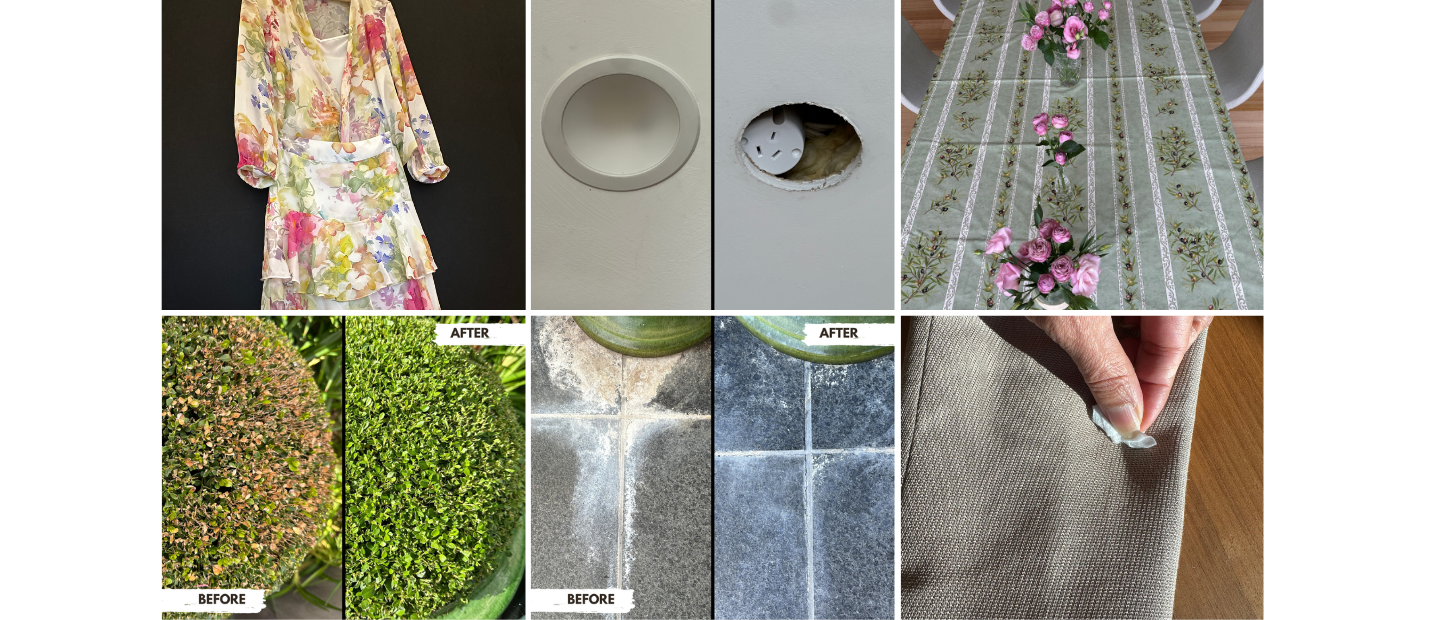
There is a gap opening up. Not a knowledge gap, not a technology gap, an action gap. Between the people who are using AI in their daily lives and the people who are not. That gap is widening every day, and the people on the wrong side of it will find it increasingly difficult to compete, professionally, financially, and in the simple business of managing a busy life.
I started The AI Edge to do something about that.
AI is not just for tech people
This is the first myth worth dismantling. AI is not a tool for people who work in technology or who are good with computers. It is a tool for anyone with a problem to solve.
The problems I have documented in this series are deliberately ordinary. A dry-clean-only jacket with a ballpoint pen mark. A sick topiary. Scale on granite pavers. A downlight that needed changing. An outfit that needed washing but said not to.
None of these required technical knowledge. None required a course, a certification, or a background in computer science. They required a problem and a willingness to ask. That is all.
If a surgeon can use AI to work out which aisle at Bunnings stocks a replacement downlight, anyone can.
Fear is the real barrier
Some people are not indifferent to AI. They are afraid of it. Afraid of asking a stupid question. Afraid of getting it wrong. Afraid of what it means for their job, their industry, their sense of competence.
That fear is understandable. It is also, if left unaddressed, the thing most likely to leave people behind.
The AI Edge posts are not a technology demonstration. They are an attempt to make AI feel approachable. To show that asking AI a basic question, even a very basic question, is not embarrassing. It is practical. Every single post in this series started with me not knowing something and asking. That is the whole method.
Access to expertise used to cost money
For most of history, access to expert advice has been rationed by wealth: a lawyer, a financial adviser, a specialist tradesperson. Good advice costs money and time, and not everyone has either.
AI changes that in a way nothing else has. Everyone now has access to expert-level guidance across almost any domain, at any hour, at no cost. The person who cannot afford to call a tradesperson can get the information a tradesperson would give them. The person without a specialist in their network can work through a complex problem with the same rigour a specialist would apply.
That is not a small shift. That is a genuine democratisation of expertise that has not existed before now.
AI amplifies your skills. It does not replace them
There is a persistent fear that AI will make human expertise redundant. In my experience, the opposite is true.
AI does not replace what you know. It removes the friction around what you know. A surgeon using AI to diagnose a sick plant is still a surgeon. The clinical thinking, the diagnostic instinct, and the pattern recognition remain. What AI does is extend that capability into domains where the surgeon has no formal training, saving time, money, and the cognitive overhead of figuring it out from scratch.
Your expertise becomes more valuable, not less, when the friction problems around it are solved faster.
AI saves time
Not just money, but time. And specifically the hidden time that nobody talks about.
The phone call you can only make during business hours. The wait for a tradesperson's booking. Being home between nine and one on a Tuesday for someone to arrive. The trip to the dry cleaner, the explanation of what happened, the return trip to collect the item.
That coordination cost is invisible until you start tracking it. AI eliminates much of it. You solve the problem yourself, in your own time, without waiting for anyone. For people with busy professional lives, that is not a small convenience. It is a significant return of time that was previously unavailable.
AI saves money
The savings in this series alone run to hundreds of dollars. Dry cleaning bills. Electrician call-out fees. Specialist cleaning visits. Gardening treatments.
None of these savings required sacrifice. The outcomes were the same or better. The difference was asking AI before reaching for the phone.
AI is a companion advisor
Perhaps the most underrated quality of AI is this: it helps you think, not just act.
When I asked AI about my sick topiary, it did not just give me an answer. It took a history. It worked through the differential. It asked what I had already tried, what the neighbours looked like, and whether the plant was on irrigation. That process, the thinking through a problem rather than just receiving a solution, reduces stress, reduces decision fatigue and consistently produces better outcomes than acting on the first answer that comes to hand.
Used well, AI is not a search engine. It is a thinking partner.
The best way to learn AI is to use it
There is no course that will teach you to use AI better than using AI. The more problems you bring to it, the better you understand how to frame a question, when to push back on the first answer, and what kinds of tasks it handles well. That skill compounds. People who have been using AI daily for two years are not two years ahead; they are exponentially ahead, because every interaction has made them more capable.
The AI Edge is my attempt to lower the barrier to that first interaction. To show that the entry point is not a coding bootcamp or a corporate training day. It is a pen mark on a jacket. A light globe. A plant that is not doing well.
Start there. The rest follows.
The AI Edge is a series of posts documenting how I use AI to solve everyday problems. You can follow the series on LinkedIn, Facebook, Instagram and X.